


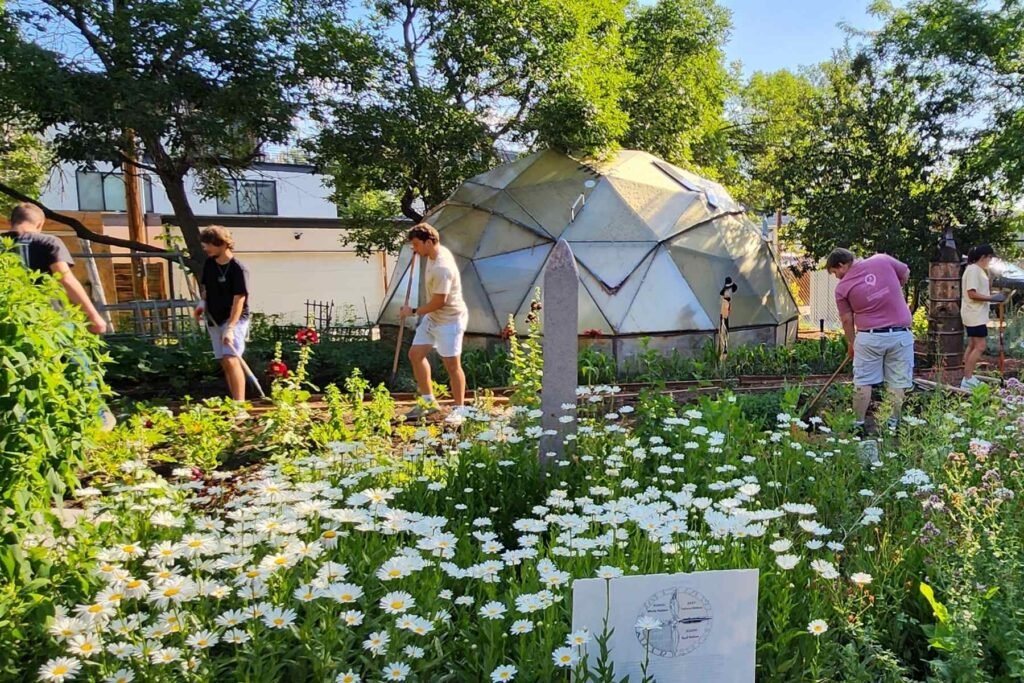
Milpa gardening, which takes its name from the Nahuatl word meaning “cultivated field,” signifies a special set of seven sacred plants called the Seven Warriors. This agricultural concept is like the Iroquois notion of Three Sisters gardening, where each plant benefits each other, and the soil. But where the Three Sisters solely consists of corn, beans, and squash and traditionally only includes the concept of companion gardening, the Seven Warriors approach also factors in nutrition, adding nopal, chili, chia, and amaranth to the mix.
Ana Chavez de Quintana, head of the Troy Chavez Memorial Peace Garden in the Highlands neighborhood of Denver, shares insights into one of the most significant crops unique to Seven Warriors, the sacred plant red amaranth (Amaranthus cruentus, or “Huauhtli” in Nahuatl). This hardy, beautiful flora is not too tricky for home gardeners to cultivate in Colorado as it loves the region’s climate: hot, dry weather and strong sunshine.
A single amaranth plant can produce half a million seeds (roughly two pounds worth). This gluten-free ancient Mesoamerican seed has a slightly nutty flavor and is high in nutritional value. Fiber, fat, protein, and a variety of nutrients like B vitamins, vitamin E, and the essential amino acid lysine (double the amount found in other grains, like wheat, and triple that of corn) make it a true super food. Even its leaves are edible and rich in iron, calcium, folic acid, and vitamin A.
Domesticated amaranth has been around on the continent for over 5,000 years — but Ana shares its complicated history. In her native ancestral Mexica culture, it was once a criminal act to cultivate this crop. In the late 1500s when the Spaniards colonized the Indigenous Mexica population, it was declared illegal to grow the sacred plant. “Due to its blood-red color, they thought it related to sacrifice,” says Ana. “We were forbidden from having it. But now, food stores are discovering it and taking it in as their own, 400 years later.”
It’s easily found in supermarket aisles as an ingredient in common snacks such as commercial energy bars. Alternatively, home cooks can pop the raw seeds in a saucepan to make a crisp, light snack, or grind them into flour and use it to make a variety of foods ranging from staples like tamales and tortillas to treats like sweet cakes and cookies.
“There are a lot of negative teachings of our history and native culture … but they don’t tell you the beautiful things,” says Ana. “It’s my goal to teach young people [our stories] so they can become better adults.”