


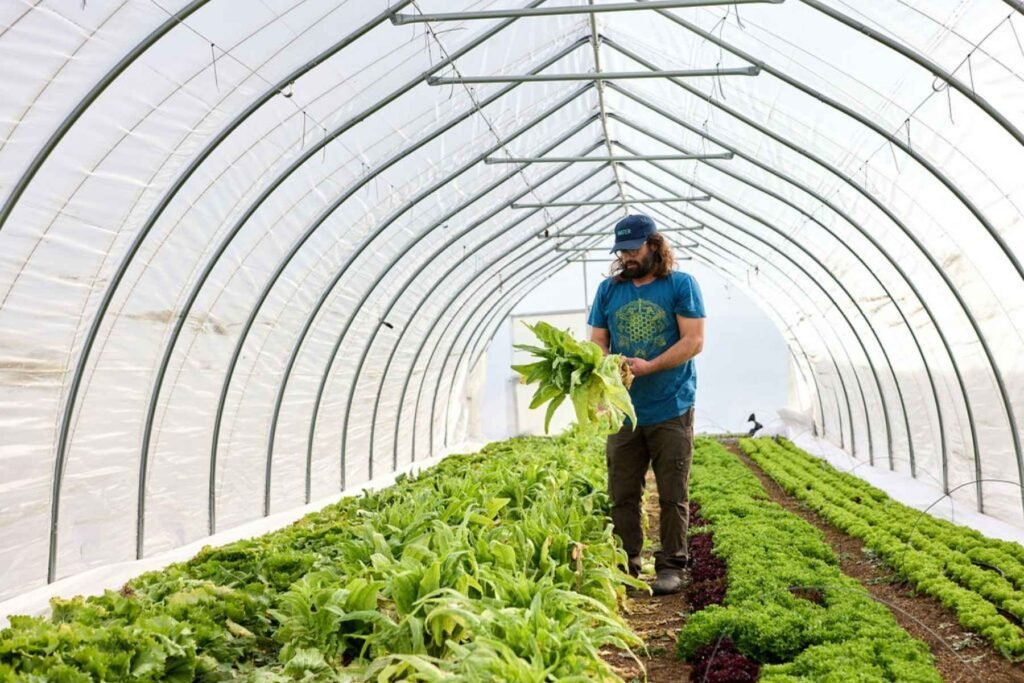
“Every part of the plant — from the first emerging shoots, through to stalks, roots, and flowers — has something to offer.”
Story By Liza Nguyen
Photography by John Robson and Callie Cavanaugh
As weather brings warm temperatures and longer days spent outside, many find themselves drawn to their gardens, where the season of abundance and harvest is just beginning. For Mark DeRespinis of Boulder’s Esoterra Culinary Garden, he has been here all year long.
The farm is nestled onto a 100-acre property owned by Boulder’s office of Open Space and Mountain Parks. It was founded by Mark, whose farming career began in New Mexico in 2014, and then transitioned to Colorado, where he’s developed a healthy following of restaurant industry professionals. Esoterra Culinary Garden has bloomed (pun intended) into a premier farm-to-chef-to-table operation growing over 70 varieties of crops harvested to serve the culinary scene in the Boulder–Denver–mountain area.
The Beginnings
Raised in Connecticut, farming wasn’t the path Mark envisioned for himself. He earned several degrees in the humanities sector and, intriguingly, wrote his master’s thesis on religion and the decline of magic.
“You wouldn’t think that relates necessarily to farming, but what I found was that part of where we lost magic in our reality was in severing our connection with the natural world,” he says. “Once we start opening up to this more animistic world view, where we have reverence for all the beings around us, then everything starts making sense again.”
As his experiences led him to a career in production agriculture, he realized he wanted the food he grew to resonate with the seasonality of when and where it was grown. “It used to be that when you ate, you were connected to when and where,” he says, citing the relevance of the season that food was grown in, and the geographic location of that food. Nowadays, most food is not grown nor consumed in that manner.
“A pound of salad mix represented resources from far away,” he reflects. Foods grown in the U.S. today are trucked hundreds of miles before reaching their final destination, for consumption.
He was inspired to produce food that, “reappropriated these resources” — and knew that a farm-to-chef-to-table operation was one of the key ways to do that. Tailored to a chef’s needs while preparing seasonally specific food could provide consumers with something that had been missing; a “connection back to the land.”
After seeing the agricultural and fresh food movement take off locally, he was drawn to the Boulder region. While he first leased property in the Longmont area, in 2020 he moved to its current location where he has been steadily and sustainably growing in ever since.
“I wanted to be engaging with that really high-caliber culinary artist, and it was seeing this food scene here [in Boulder] that was starting to get some incredible momentum,” Mark says. “With the short season and everything here, it’s very challenging if you want to be a farm-to-table restaurant, to actually do it, unless a farmer is really willing to work with your needs. And that’s really what we’ve been focusing on since the beginning.”
The Seeds Have Grown
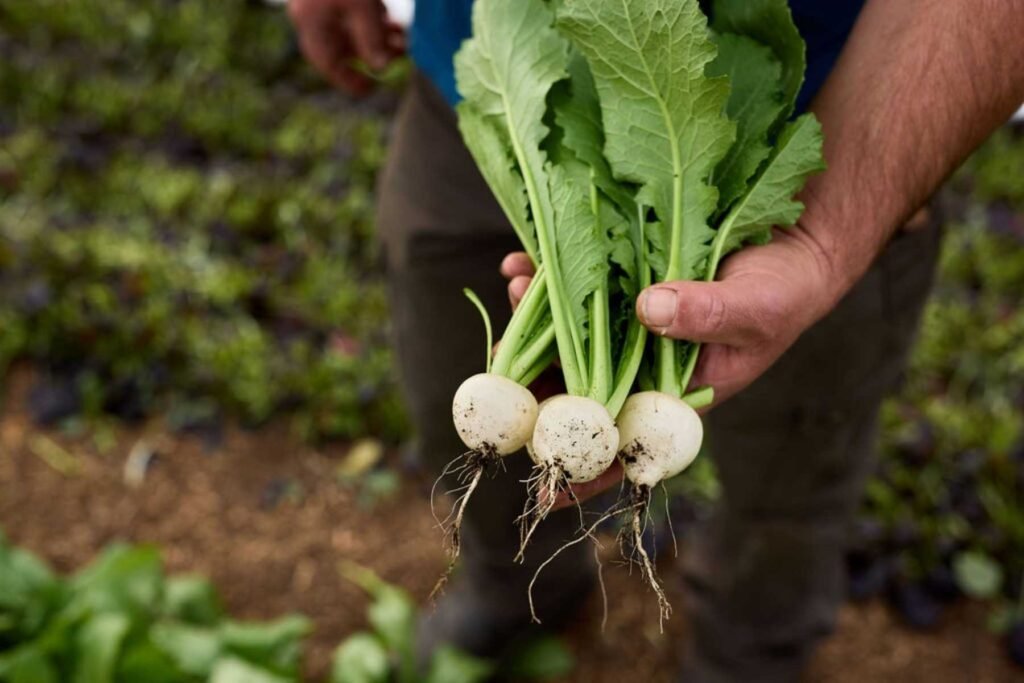
Today, Esoterra Culinary Garden is home to nearly 400 garden beds, each cared for by hand, growing a variety of produce from tomatoes to onions, carrots, and more traditional vegetables local chefs always need. But what differentiates its offerings are the novel varieties of each crop, including a range of unique and exquisite flavor profiles.
Case in point, Esoterra’s orange currant tomatoes, Tropea onions, and mokum carrots; a wide array of the farm’s impressive yield that helps consumers expand their palates and taste buds. The farm also grows various esoteric crops including crosnes (also known as Chinese artichokes); tromboncino, a type of summer squash; and puntarelle, a crunchy and mildly bitter Italian chicory.
As for the backstory behind the name of his farm, Mark cites several sources of inspiration. “I wanted something that captured my esoteric domains of knowledge [in art and the humanities],” he explains. “It’s also a bit of an homage to ‘this earth’ with the names eso and terra,” he says. “Terra is also my wife’s name, though that’s not how she spells it,” he says with a laugh.
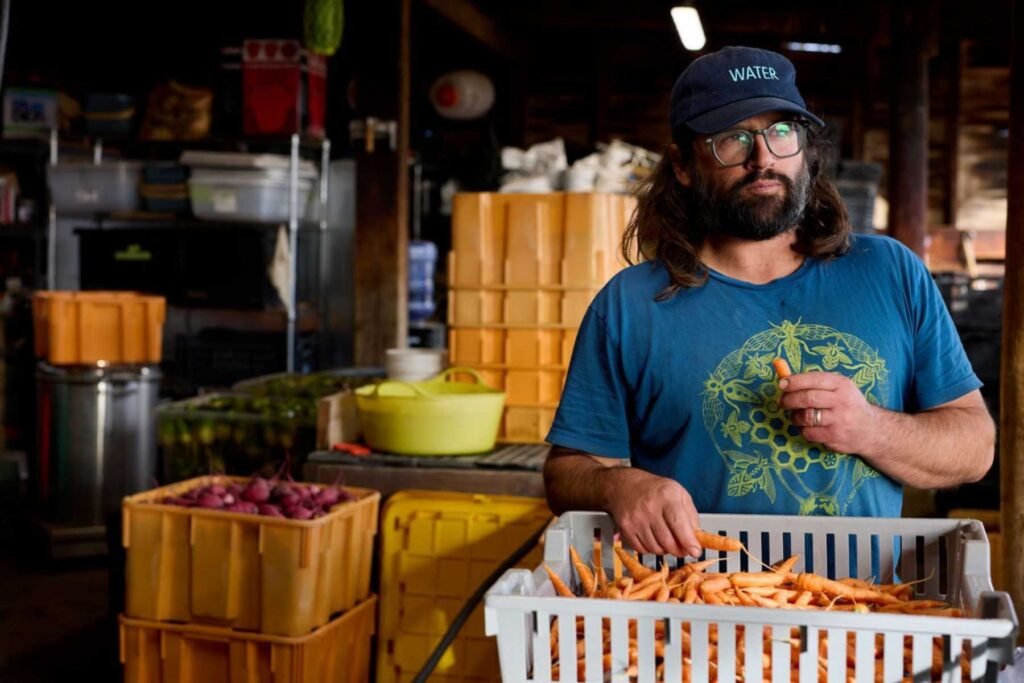
Esoterra distributes to restaurants and chefs mostly within the Boulder and Denver areas, though has recently expanded into some local mountain towns. This past winter, with record warm temperatures and the lowest snowpack of a cold season in the last 40 years, Mark knew he would have to rely on the resiliency of his operations to sustain the business. While the unusually warm weather throughout the winter months allowed Esoterra to continue supplying salad greens and other produce for longer, Mark assumed a winter with not enough snowfall would lead to challenges in having enough water for the spring and summer seasons. But he’s used to getting creative with his crops, in order to keep surviving — and thriving.
“Our entire operation is built around redundancy and resilience… if one bed doesn’t do well, we shift to another bed,” says Mark. “Together, [my team and I] work on this infinitely complex plan… We have spreadsheets that have a thousand different plantings on them.”
With an increasing amount of purchasing desire from chefs, the demand at Esoterra is currently so high that the future of Esoterra is likely invested in educating their customers on how to do more with their produce, instead of growing additional crops. “Chefs are not just buying a carrot, they’re buying into a relationship with the garden [because] everything we grow is a treasure,” he says.
The farm’s offerings can be found at restaurants across the Front Range, including The Wolf’s Tailor, Tavernetta, Margot,and Potager, among dozens of others. He also hosts educational farm tours for chefs and their teams (sometimes upwards of 70 people at a time) to showcase how and where their food is raised. A special connection is created in these moments, between the chefs and the ingredients they’re using to prepare a dish, and this true farm-to-table relationship they’ve been cultivating can then be communicated with their customers. “With this yearning to de-commodify our relationship with our food, we have this opportunity to tell stories again,” Mark says.
Pops of Beauty
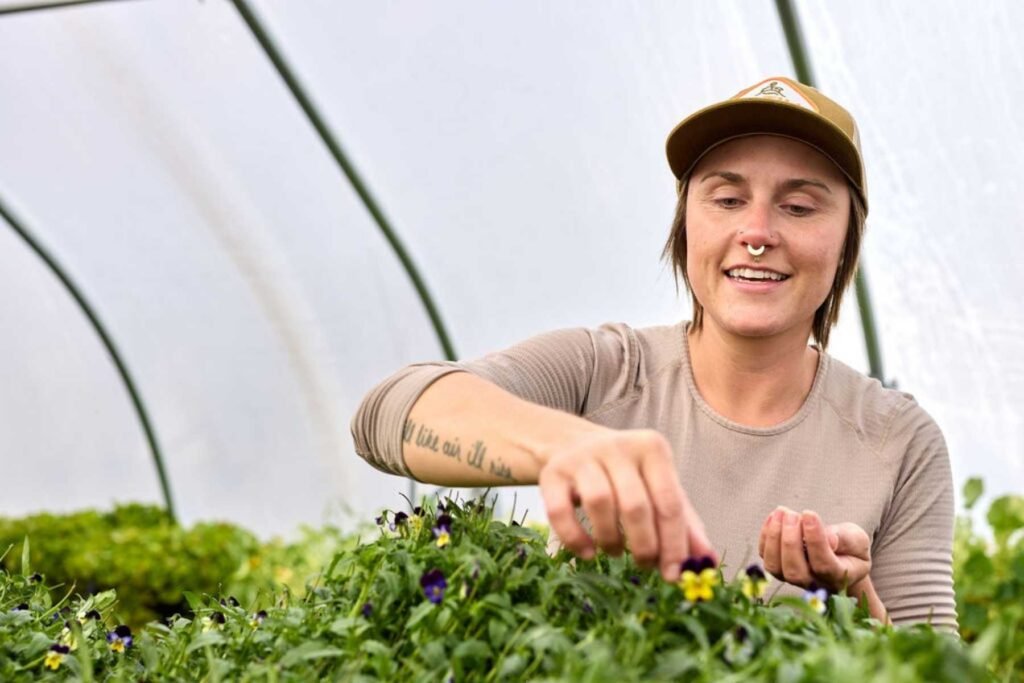
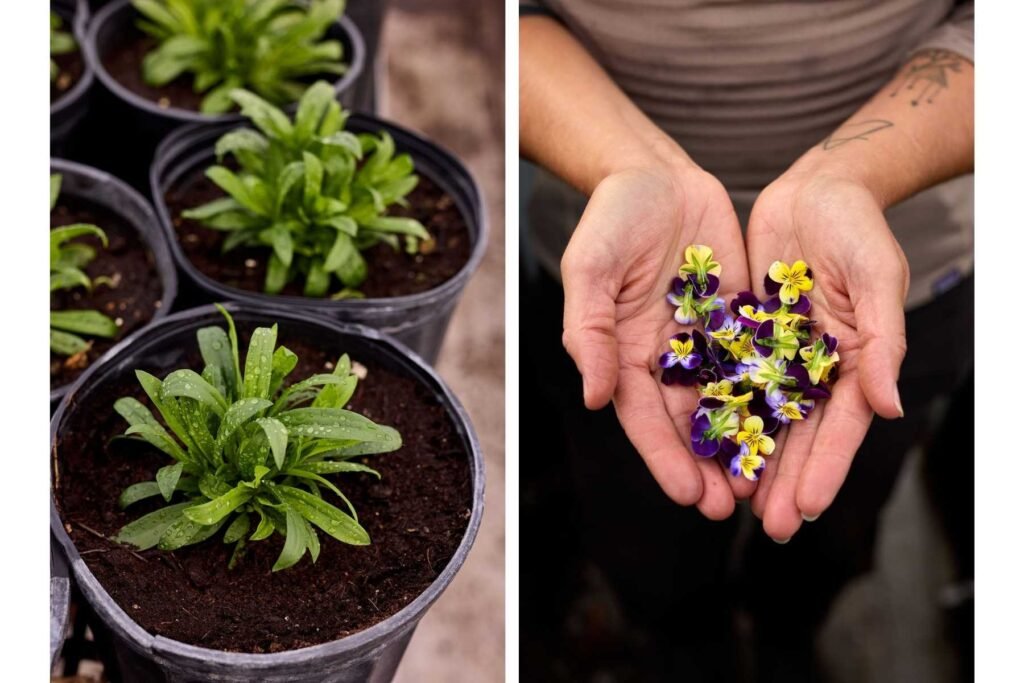
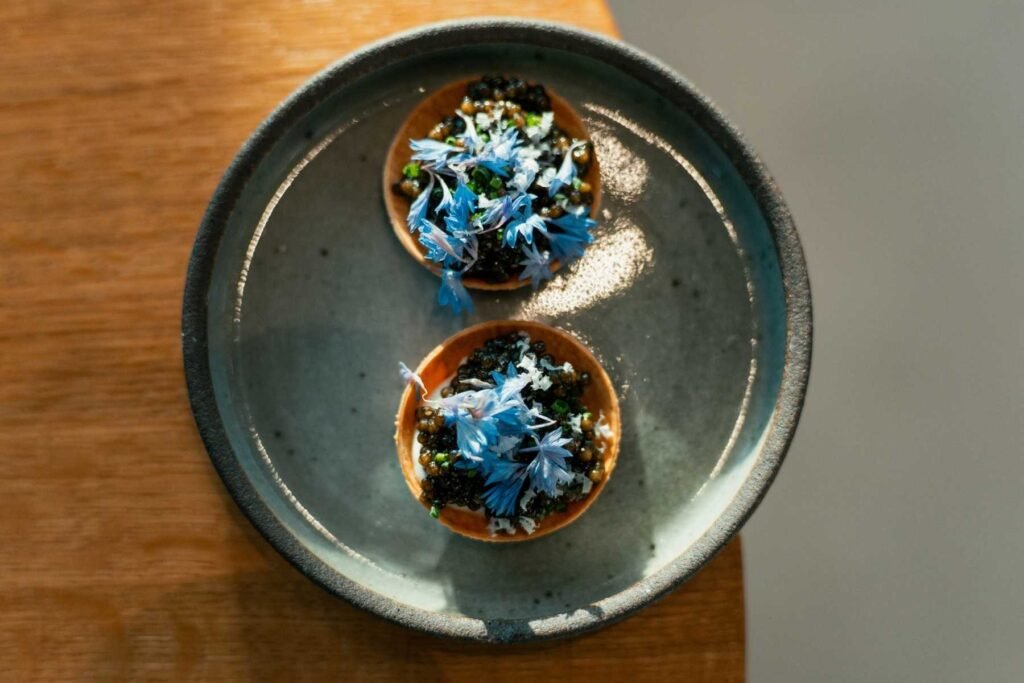
One particularly in-demand crop Esoterra offers chefs are edible flowers. When asked how these edible flowers were first introduced into Esoterra’s offerings, Mark recalls a personal experience while trying to combat subtle chronic health issues: He tried apitherapy — also known as bee sting therapy.
“They give you a tenth of a bee sting at these acupressure points on your body… I walked out of that session, went right to my computer, and ordered all of these flowers,” he recalls. Mark knew that it would be critical to incorporate beneficial pollinators, such as bees, into his operation. “It’s fundamental to our ecological design [to have insects]… so if we can incorporate [their food] into the design of the garden as flowers, they might as well be edible flowers. Why not? So many are!” he says.
He notes that many Michelin-rated restaurants around the world use edible flowers in their plating and in dishes themselves. Ever the learner, he has identified almost every single one of these florae and set out to grow many of them at the farm to serve this distinctive trend in the culinary scene.
“We take a whole-plant aesthetic that we then offer,” he says. “Every part of the plant — from the first emerging shoots, through to stalks, roots, and flowers — has something to offer. We look at [Esoterra] as an opportunity to have a relationship with these plants at all stages of growth. Flowers are not any less to be celebrated than any other part of the plant.”